

Construction NVQ Qualifications Explained: Level 2 to 7 Complete Guide
Discover the full spectrum of Construction NVQ qualifications explained (Levels 2 to 7) in our complete guide. Master career advancement with tailored paths from NVQ Level 2 to 7, including CSCS card links, work-based learning benefits, and achieving MCIOB status for a competitive edge in the UK construction industry.
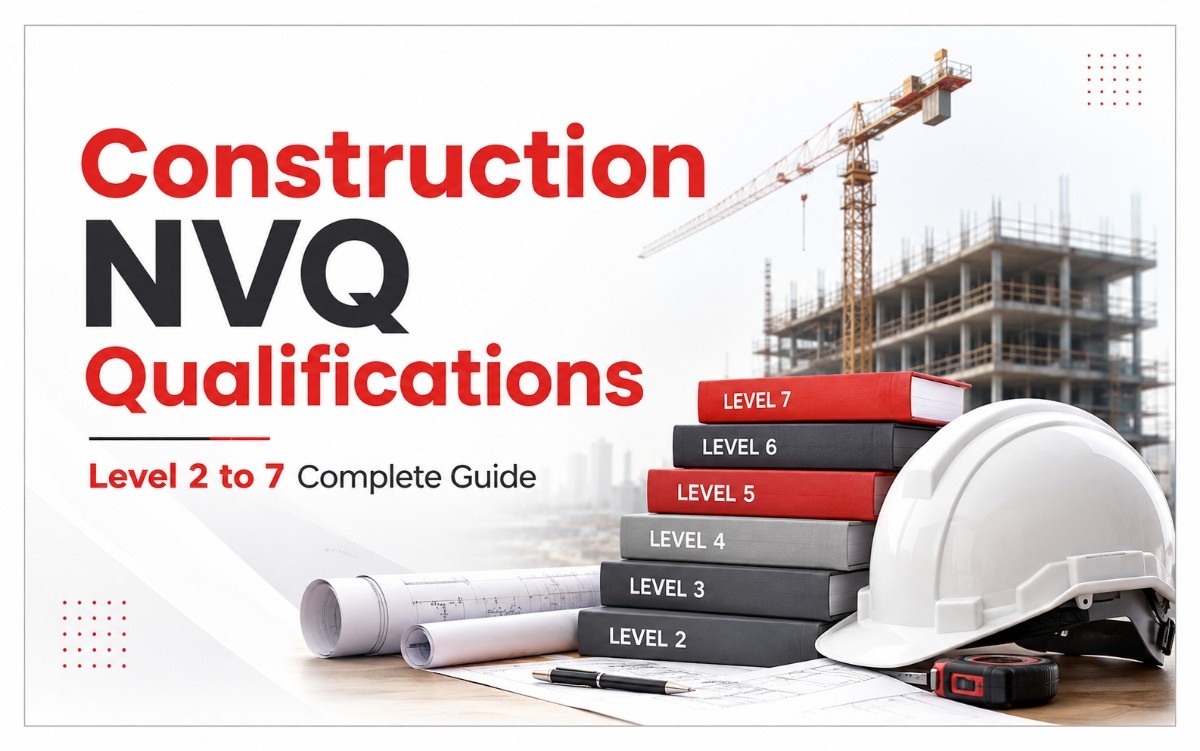
The UK construction industry is a dynamic, fast-paced environment where safety, competence, and compliance are absolutely paramount. Whether you are a newly qualified tradesperson laying your first bricks or a seasoned professional overseeing multi-million-pound commercial developments, proving your competence is non-negotiable. This is exactly where National Vocational Qualifications (NVQs) come into play.
What is a Construction NVQ?
A National Vocational Qualification (NVQ) is a work-based award that recognises the skills and knowledge a person needs to do a specific job. Unlike traditional academic courses, NVQs do not require you to sit in a classroom, take written exams, or write lengthy theoretical essays. Instead, they are practical, hands-on, and entirely focused on what you actually do on a construction site.
The True Value of Work-Based Learning
The UK construction sector heavily favours practical competence over pure theory. One of the greatest benefits of work-based vocational training is that it allows candidates to earn while they learn. You do not have to take time off work to gain accreditation. Your daily tasks, from reading site drawings to conducting toolbox talks, become the very evidence used to pass your qualification.
Employers also highly value this system. The onsite assessment and training benefits mean that companies suffer from zero downtime. Assessors visit the candidates in their actual working environment, ensuring that the training is directly relevant to the company’s specific operational needs.
A Complete Guide to the NVQ Assessment Process
If you have never undertaken an NVQ before, the concept of being "assessed at work" can sound a bit daunting. However, the process is incredibly supportive and straightforward.
Here is a step-by-step guide to the NVQ assessment process mechanics:
Your journey begins with an initial assessment. An NVQ provider will review your current job role, your daily responsibilities, and your previous experience to ensure you are enrolled on the correct level. You will then be assigned as a dedicated assessor who is an experienced, qualified professional in your specific trade or management area.
To achieve an NVQ, you must prove that your work meets national occupational standards. This is done by building a portfolio. The NVQ portfolio evidence requirements are strict but highly practical. Your assessor will help you gather:
- Direct Observation: Your assessor visits your site to watch you work.
- Photographic and Video Evidence: Visual proof of you completing tasks safely.
- Workplace Documents: Risk assessments, method statements (RAMS), site diaries, timesheets, and drawings.
- Witness Testimonies: Statements from site managers, supervisors, or clients confirming your competence.
- Professional Discussion: A recorded Q&A session with your assessor to demonstrate your underpinning knowledge of health and safety, building regulations, and trade techniques.
Once your portfolio is complete, your assessor signs it off. It is then cross-checked by an Internal Quality Assurer (IQA) and sometimes an External Quality Assurer (EQA) from the awarding body (such as City & Guilds, ProQual, or Pearson) to ensure all standards are met.
For highly skilled tradespeople who have been in the industry for years but lack formal paperwork, the experienced worker for fast-track NVQ is a game-changer. This route relies heavily on professional discussions and existing workplace evidence, allowing seasoned professionals to achieve their NVQ in a matter of weeks rather than months.
The Blueprint: Level-by-Level Breakdown (Levels 2 to 7)
To truly understand how to map out your career, we must look at the specific tiers of achievement.
Here are the Construction NVQ qualifications explained (Levels 2–7).
Level 2: The Foundation of Skilled Trades
An NVQ Level 2 is a nationally recognised, work-based qualification designed for skilled construction workers in the UK. It assesses your competence through evidence from your day-to-day job rather than exams. Achieving this qualification demonstrates occupational competence and can support your application for the Blue CSCS Skilled Worker Card.

Level 3: Advanced Craft and Occupational Supervision
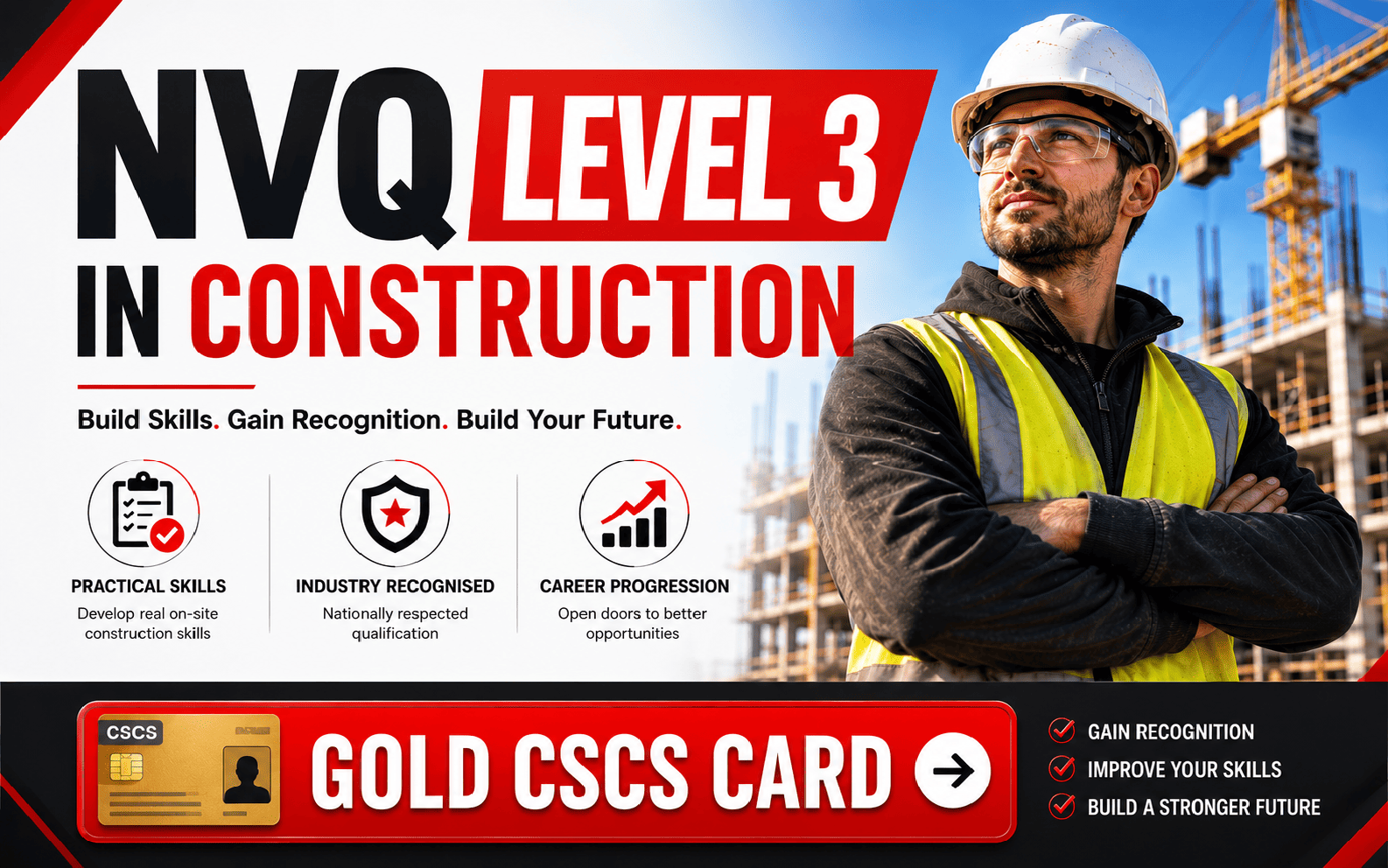
An NVQ Level 3 is a nationally recognised, work-based qualification for experienced construction workers who supervise teams or take on greater responsibilities on site. It assesses your competence through workplace evidence rather than exams. Achieving this qualification demonstrates supervisory skills and can support your application for the Gold CSCS Supervisor Card.
Level 4: Stepping into Site Management
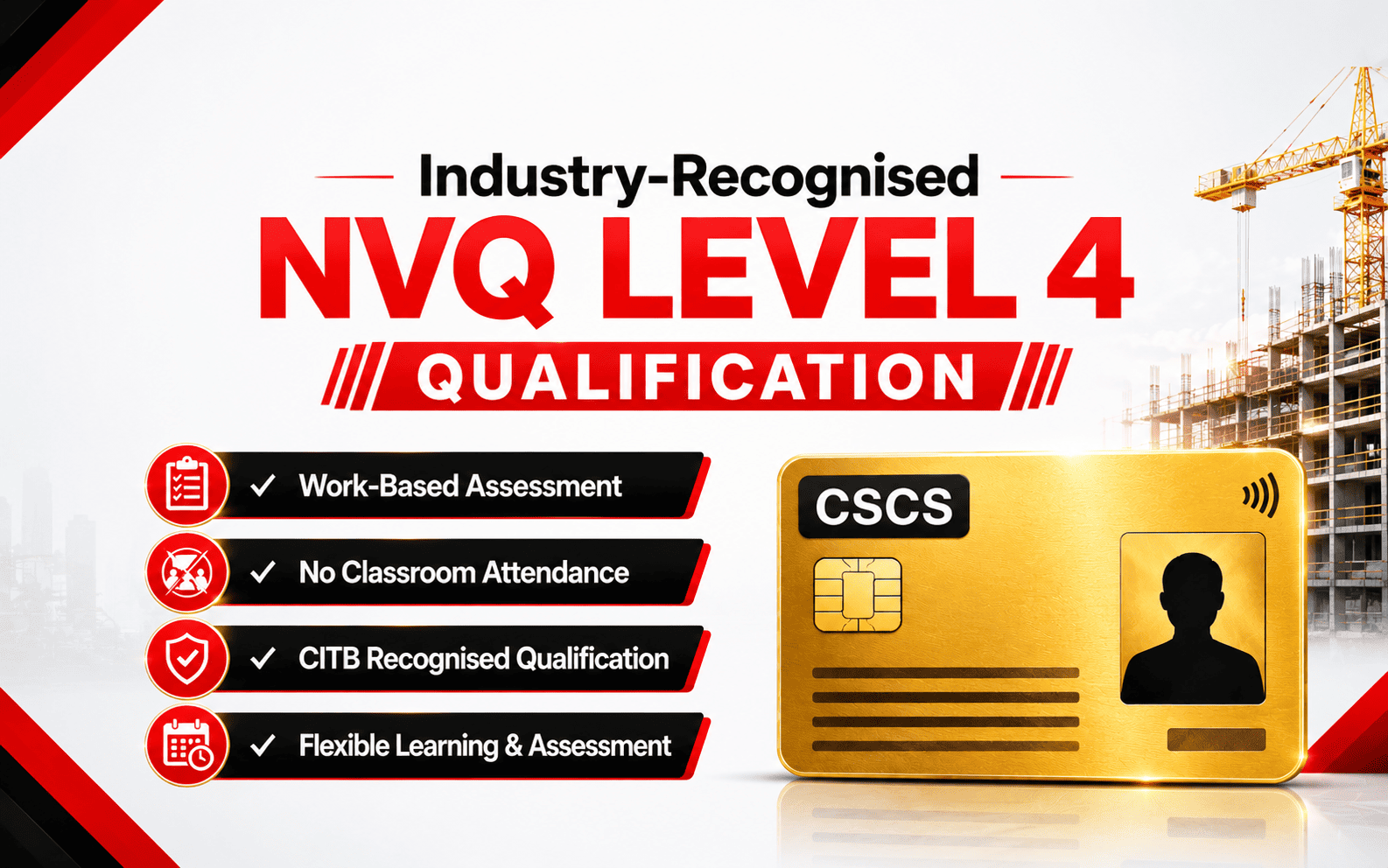
An NVQ Level 4 is a nationally recognised, work-based qualification for construction supervisors and site managers in the UK. It assesses your ability to manage people, resources, and site operations through workplace evidence rather than exams. Completing this qualification demonstrates management competence and can support your application for a Black CSCS Card.
When progressing from operative to manager, the jump from Level 3 to Level 4 is arguably the most significant transition in a construction worker's career. You are putting down the tools and picking up the clipboard.
- Maintain systems for health, safety, welfare, and environmental protection.
- Assess and recommend work methods.
- Plan and schedule construction activities.
- Control project progress against agreed quality standards.
This level provides a structured introduction to management, ensuring you understand the legal and commercial realities of running a construction site.
Level 5: The Established Manager
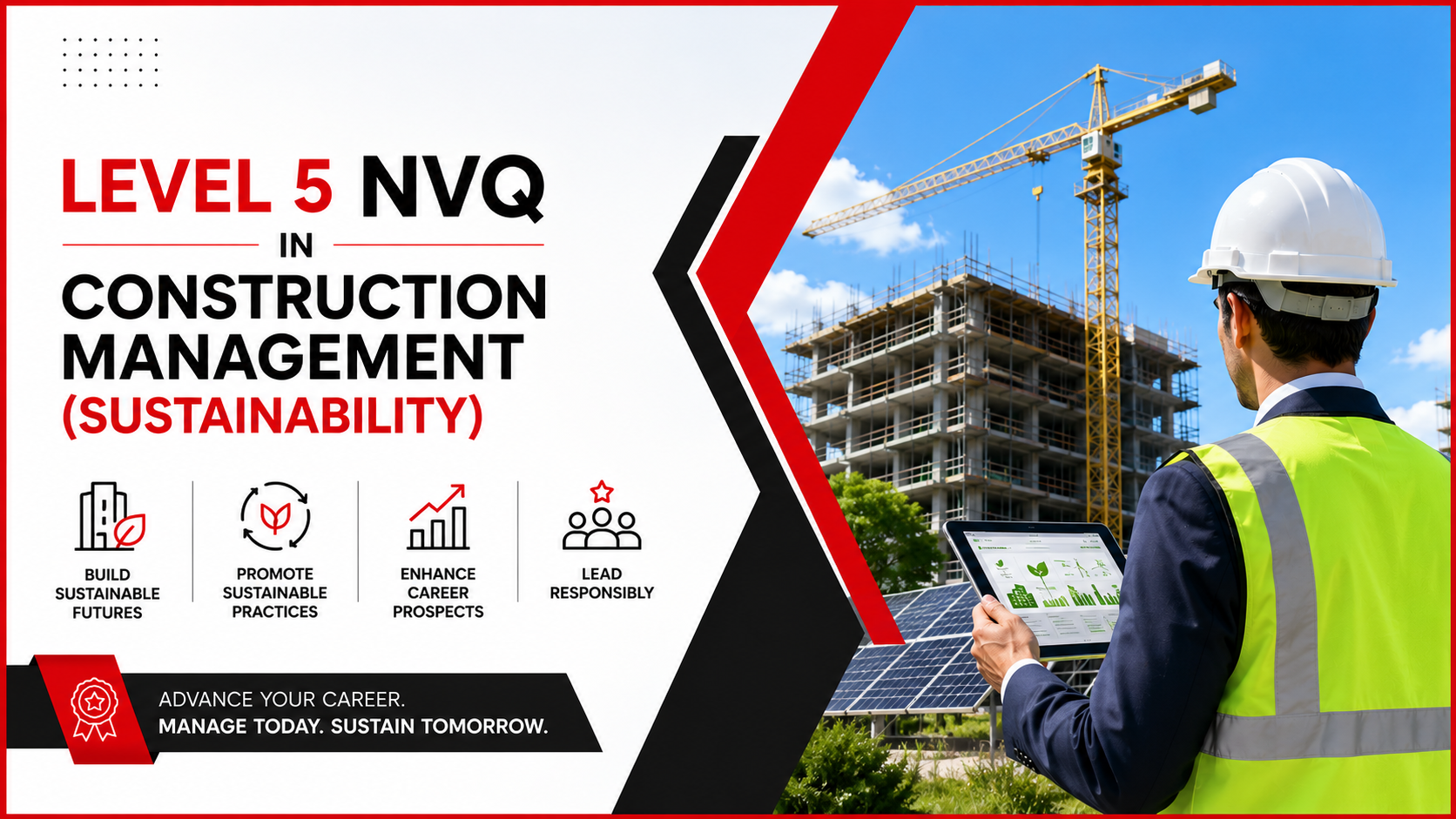
An NVQ Level 5 is a nationally recognised, work-based qualification for experienced construction managers responsible for planning, coordinating, and overseeing projects. It is assessed through workplace evidence rather than exams, demonstrating advanced management competence. Achieving this qualification can support career progression into senior management roles within the UK construction industry.
Level 6: Senior Site Management
If you are managing large-scale, high-value projects, you will need to look at NVQ Level 6 qualifications in construction. This is an advanced, degree-equivalent qualification designed for highly experienced site managers, project managers, and contract managers.
- Detailed project schedules (e.g., Gantt charts, Asta Powerproject documents).
- Evidence of managing external stakeholders (local authorities, HSE inspectors, clients).
- Minutes from site meetings that you have chaired.
- Comprehensive procurement strategies and budget controls.
- In-depth environmental and sustainability management plans.
Level 7: Executive and Directorship Level
An NVQ Level 7 is a nationally recognised, work-based qualification for senior construction managers, directors, and project leaders in the UK. It assesses strategic leadership, commercial management, and operational expertise through workplace evidence rather than exams. Achieving this qualification demonstrates senior management competence and supports progression towards chartered and executive-level roles.
- Formulating business strategies and evaluating company performance.
- Managing enterprise-wide risk and corporate compliance.
- Directing the management of construction contracts on a macro level.
- Leading strategic supply chain and procurement systems.
Candidates undertaking this level are often involved in multi-million-pound decisions, shaping the future of their respective construction firms.
Career Advancement: Progressing from Operative to Manager
The beauty of the UK construction industry is its incredible social mobility. It is entirely possible and indeed very common for someone to start out sweeping floors and carrying blocks as a labourer and end up running the entire company as a Construction Director.
This journey is made possible by the structured nature of construction qualifications. Progressing from operative to manager requires a fundamental shift in mindset. As a Level 2 tradesperson, your primary concern is the quality and speed of your own physical work. As you move into Level 3 and Level 4, your concern shifts to the safety, efficiency, and quality of the people working around you. By the time you reach Levels 6 and 7, your focus is entirely on strategy, commercial viability, and corporate leadership.
Do not wait until you are promoted to start thinking about your next NVQ. If you are a Level 3 supervisor wanting to become a Level 4 or 6 site manager, start asking your current site manager to shadow them. Ask to sit in on subcontractor meetings, learn how to read construction programmes, and familiarise yourself with the commercial side of the project. This will naturally build the competence you need to tackle the higher-level NVQs when the time comes.
While CSCS cards are mandatory for site access, professional institute memberships represent the gold standard of industry prestige. The Chartered Institute of Building (CIOB) is the world's largest and most influential professional body for construction management and leadership.
One of the greatest advantages of completing higher-level NVQs is the streamlined route to chartership. CIOB membership through NVQ achievement is a well-trodden path. If you complete an NVQ Level 6 or the NVQ Level 7 Senior Management Diploma, you meet the academic requirements for full chartered membership.
Instead of having to go back to university to complete a full degree, your Level 6 or 7 NVQ allows you to progress directly to the CIOB Professional Review. During this review, you submit a detailed report on your professional experience and undergo an assessment by a panel of industry peers. Once successful, you earn the right to use the letters MCIOB after your name, significantly boosting your employability, salary prospects, and professional authority.
A common barrier to upskilling in construction is the perceived cost. NVQs, particularly at management levels, can be an investment. However, there is substantial support available to help offset these costs.
Understanding the funding for the construction NVQ qualifications is crucial for both individual workers and employers.
The CITB grants for construction training are designed to encourage employers to invest in their workforce. For example, upon the successful completion of a Level 2 NVQ, an employer can claim back a set grant amount. For higher-level management NVQs (Levels 4, 6, and 7), the grant amounts are even larger, sometimes covering the vast majority of the qualification's cost.
Depending on where you live in the UK, there are often local enterprise partnerships, adult education budgets (AEB), and government-funded skills bootcamps that provide partial or even full funding for specific construction qualifications.
If you are a construction employer, do not view NVQs merely as an expense. Upskilling your workforce through funded NVQs allows you to tender for larger, more lucrative public sector contracts, many of which legally require a fully qualified, CSCS-carded workforce.
Preparing for Your NVQ: Best Practices
To ensure a smooth, stress-free assessment process, preparation is key. Whether you are aiming for a Level 2 in plastering or a Level 7 in executive management, following these best practices will help you succeed:
Your assessor is not trying to catch you out; they are there to help you cross the finish line. Be transparent about your schedule and any areas where you feel you might struggle to gather evidence.
Create a dedicated digital folder on your laptop or smartphone for your NVQ portfolio evidence requirements. Every time you sign off a RAMS sheet, take a photo of it. Every time you chair a site meeting, save the minutes. Little and often is the best strategy.
Many candidates hate writing long explanations. Take advantage of modern technology. If you need to explain how you navigated a complex health and safety issue on site, ask your assessor to record a professional discussion on Microsoft Teams or Zoom. This audio evidence is just as valid as a written essay and often much faster to produce.
Ask your training provider for the "National Occupational Standards" for your specific NVQ units. Read through them carefully. Once you know exactly what the awarding body is looking for, it becomes much easier to identify the right evidence in your daily working life.
Read Also:
How to Get a CSCS Card: A Complete Guide by M2hse Training
The Future of Construction Qualifications
The construction industry is evolving rapidly. With the introduction of the Building Safety Act, the push for net-zero carbon emissions, and the rise of digital construction (BIM), the demand for provable competence has never been higher.
The pathway from Level 2 through to Level 7 provides a clear, logical, and achievable roadmap for anyone willing to put in the work.
Conclusion
Understanding the landscape of the industry is half the battle won. With Construction NVQ qualifications explained (Levels 2 to 7) clearly, you can now take actionable steps toward your next career milestone.
Whether you are looking to secure a Blue Skilled Worker card through a Level 2, aiming to understand the nuances of NVQ Level 2 vs Level 3 to step up into supervision, or planning to dominate the boardroom with an NVQ Level 7 Senior Management Diploma and MCIOB status, the vocational route offers unparalleled flexibility and real-world relevance.
Invest in your competence, gather your evidence diligently, and use work-based learning to build a resilient, highly rewarding career in the UK construction industry.
Comments
No comments yet. Be the first to share your thoughts.
Post a comment
Contact us
Send a message and our team will get back to you.
Message us on WhatsApp for a quick reply.